Master of Computer Applications
About Department
About Department
About the Department
The Department of Master of Computer Applications (MCA) was established in 2023 with an intake of 180 students. It is supported by a team of highly qualified and experienced faculty actively engaged in research and academic excellence. The department emphasizes skill development through NPTEL certifications, design thinking activities, and globally recognized certifications.
The MCA curriculum is designed to align with industry requirements, covering programming languages, database management systems, web development, networking, and emerging technologies such as cloud computing and data science. This comprehensive approach equips students with the technical expertise and problem-solving skills needed for the rapidly evolving IT landscape.
Graduates from the MCA program secure roles in various IT sectors, including software development, system administration, data analysis, and web development. The department plays a pivotal role in shaping a skilled workforce ready to drive innovation and contribute to the growth of the digital economy.
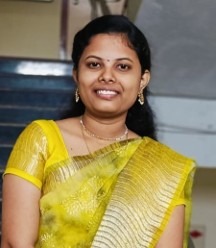
Welcome to the Department of Master of Computer Applications. Our department is committed to academic excellence, innovation, research, industry collaboration, and holistic student development. We continuously strive to prepare students for successful careers in emerging technologies.
Head of Department
The department aims to develop graduates with strong expertise in computation, algorithms, data structures, programming, software development, Artificial Intelligence, data analytics, cloud computing, Big Data, cybersecurity, and secure application development. Students are provided exposure to programming languages and technologies such as C, Python, Java, and open-source technologies, along with emerging areas relevant to industry and research.
The department has established Centres of Excellence and industry-supported initiatives in niche technological areas in collaboration with leading organizations such as PEGA Systems, CTS, TCS, Infosys, etc and other industry partners. These collaborations provide students and faculty with opportunities for exposure to current technologies, industry practices, hands-on training, certifications, internships, projects, and real-world problem solving.
The department follows a student-centric and experiential learning approach through a wide range of academic and co-curricular activities, including classroom teaching, seminars, student presentations, video lectures, MOOCs, NPTEL/SWAYAM courses, online learning, Minor and Honors programmes, internships, project-based learning, experiential learning, coding activities, hackathons, and industry-oriented training. These initiatives facilitate the development of technical competencies, problem-solving abilities, communication skills, teamwork, leadership qualities, innovation, and lifelong learning capabilities.
The Department of Computer Science and Engineering (CSE) has been recognized by Jawaharlal Nehru Technological University–Gurajada Vizianagaram (JNTU-GV) as a Research Centre for the academic years 2023–24, 2024–25, 2026–27, and 2027–28. This recognition reflects the department's sustained commitment to strengthening research, innovation, and advanced learning in Computer Science and Engineering and its emerging areas.
The department has a strong research-oriented faculty base. All eligible faculty members holding Ph.D. qualifications have been recognized as research guides by JNTU-GV, in accordance with the applicable university norms. The recognized research guides have been allocated research scholars and are actively engaged in guiding doctoral research in their respective areas of specialization.
The Research Centre provides a structured platform for faculty members and research scholars to undertake advanced and interdisciplinary research, publish research outcomes in reputed journals and conferences, pursue funded research, develop intellectual property, undertake consultancy and collaborative research, and address industry and societal challenges through innovative technological solutions. The department promotes a vibrant research culture through faculty research, doctoral research, student projects, publications, workshops, seminars, collaborations, and innovation-oriented activities.
Vision & Mission
Vision
To develop competent and industry-ready IT professionals with strong technical expertise, ethical values, and social responsibility to meet global technological challenges.
Mission
M1
To impart strong foundations in computer applications, software development, and emerging technologies through effective teaching–learning practices.
M2
To enhance problem-solving, analytical, and programming skills through laboratories, projects, internships, and industry interaction.
M3
To develop professional skills such as teamwork, communication, leadership, and ethical responsibility for successful careers in IT and allied sectors.
M4
To promote lifelong learning, innovation, and adaptability to continuously evolving computing technologies.
PEOs, POs & COs (UG)
Course Outcomes (COs)
Select the document to view the Course Outcomes.
Program Educational Objectives (PEOs)
Our graduates are expected to achieve the following educational objectives.
Graduates will establish successful careers as software professionals, system analysts, or IT consultants in industry or pursue higher education and research.
Graduates will analyze, design, and develop software solutions using modern programming languages, tools, and frameworks.
Graduates will demonstrate professionalism, ethical conduct, effective communication, and teamwork in multidisciplinary environments.
Graduates will continuously upgrade their technical knowledge and skills to adapt to emerging technologies and societal needs.
Program Specific Outcomes (PSOs)
Our graduates are expected to achieve the following program specific outcomes.
Ability to design, develop, and deploy software applications using appropriate programming paradigms, databases, and web technologies.
Ability to apply computing concepts, problem-solving techniques, and modern tools to develop efficient and secure IT solutions.
Faculty Members